Undergraduate Majors and Minors

The Classics Department offers two majors: Classics and Ancient Studies. The major in Classics emphasizes the study of Greek and/or Latin literature read in the original languages. The Ancient Studies major emphasizes ancient political, social, and cultural history; work in the ancient languages is recommended but not required. Minors are also offered in both Classics and Ancient Studies.

Classics Major

In fulfilling the general requirements for the A.B. degree, prospective majors in Classics are urged to select courses in their major and in other departments according to their own interests, abilities, and long-range educational plans. The Department feels strongly that the study of Greek and Roman civilizations encompasses more than literature alone and does not end with antiquity; rather, there are various aspects of antiquity and they all shed light on one's own time as much as the contemporary world illuminates the past. Accordingly, the student and the advisor will devise an individually planned program which will incorporate the totality of the student's interests in antiquity as well as in subsequent periods and other areas. For example, some courses in Art History and Archaeology and Philosophy are applicable to a Classics major and contribute strongly to a general appreciation of ancient civilizations.

Departmental requirements call for a minimum of 18 credits in advanced courses. The specific program will be determined by the student and the advisor, according to the student's interests and  courses offered in alternation from year to year, allowing the full range of Classical literature to be studied. However, all majors must include in their programs at least 6 units on the 400 level in Greek and/or in Latin. Competence in more than one language, though strongly encouraged, is not required. Majors, especially those planning graduate work, should enter the Honors Program if time permits.

Ancient Studies Major

The department also offers an alternative major in Ancient Studies if you wish to examine the whole spectrum of the classical world with little or no work in the ancient languages. The student and advisor create a program of study that comprises at least 24 units drawn from courses in the Department of Classics and those in related departments, of which 18 units must be at the advanced level, six of them at the 400 level. Greek and Latin courses at the 102 level or above may be used in partial fulfillment of this requirement. In this major you are encouraged to develop a certain depth in one special field of interest (e.g., literature, art, history, or philosophy). Therefore, at least 9 of the 24 advanced units of the major should be taken in one such specific area. For further information, consult the department chair by the middle of the sophomore year.
Classics Minor

The emphasis is upon the reading of Greek or Latin literature in the original language.
Units Required: 15
Required Courses:
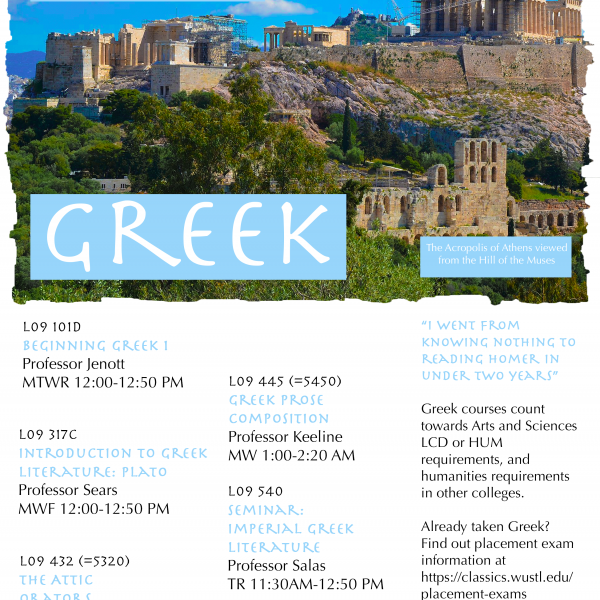
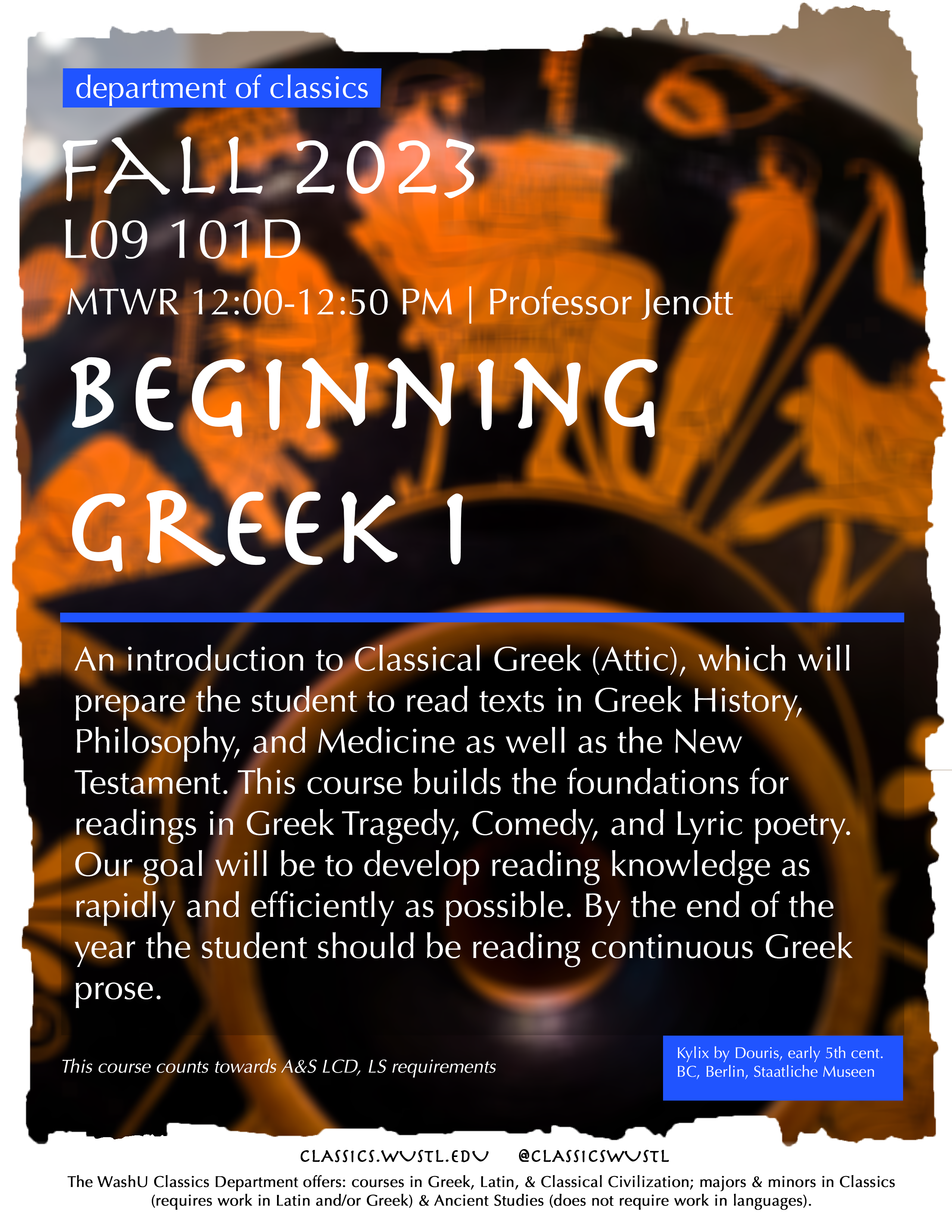
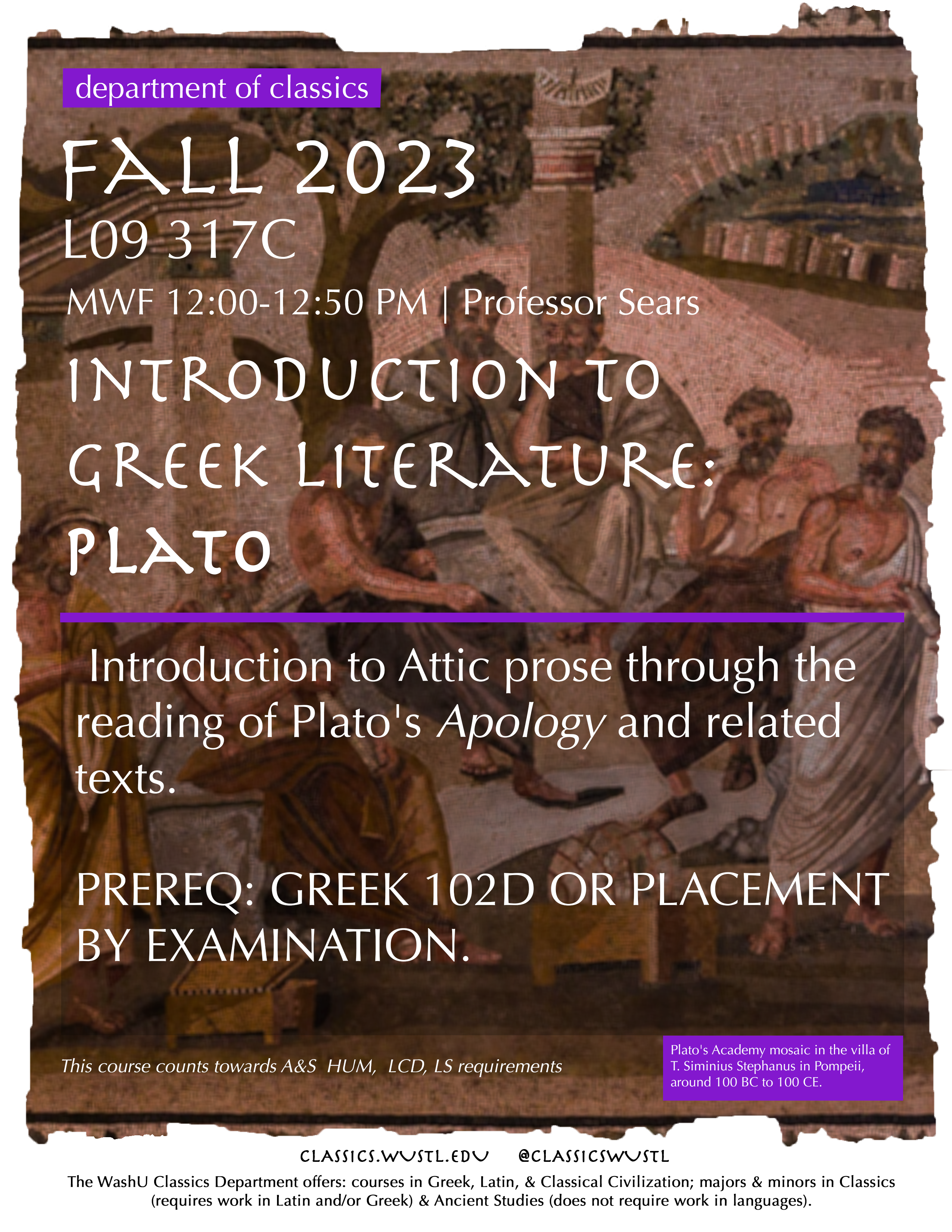
Grk 317C-318C - Intro to Greek Literature
OR
Lat 317C-318C - Intro to Latin Literature
Elective Courses: Three other courses (9 units) in Greek, Latin, or Classics, the selection to be mutually agreeable to the Department advisor and to the student. These must include at least one Greek or Latin course at the 300 or 400 level. No more than one course may be at the 200 level, and Classics 225D may not be counted.

Ancient Studies Minor

The emphasis is upon one or more aspects of antiquity without required study of an ancient language.
Units Required: 15
Required Courses: At least two of the following:
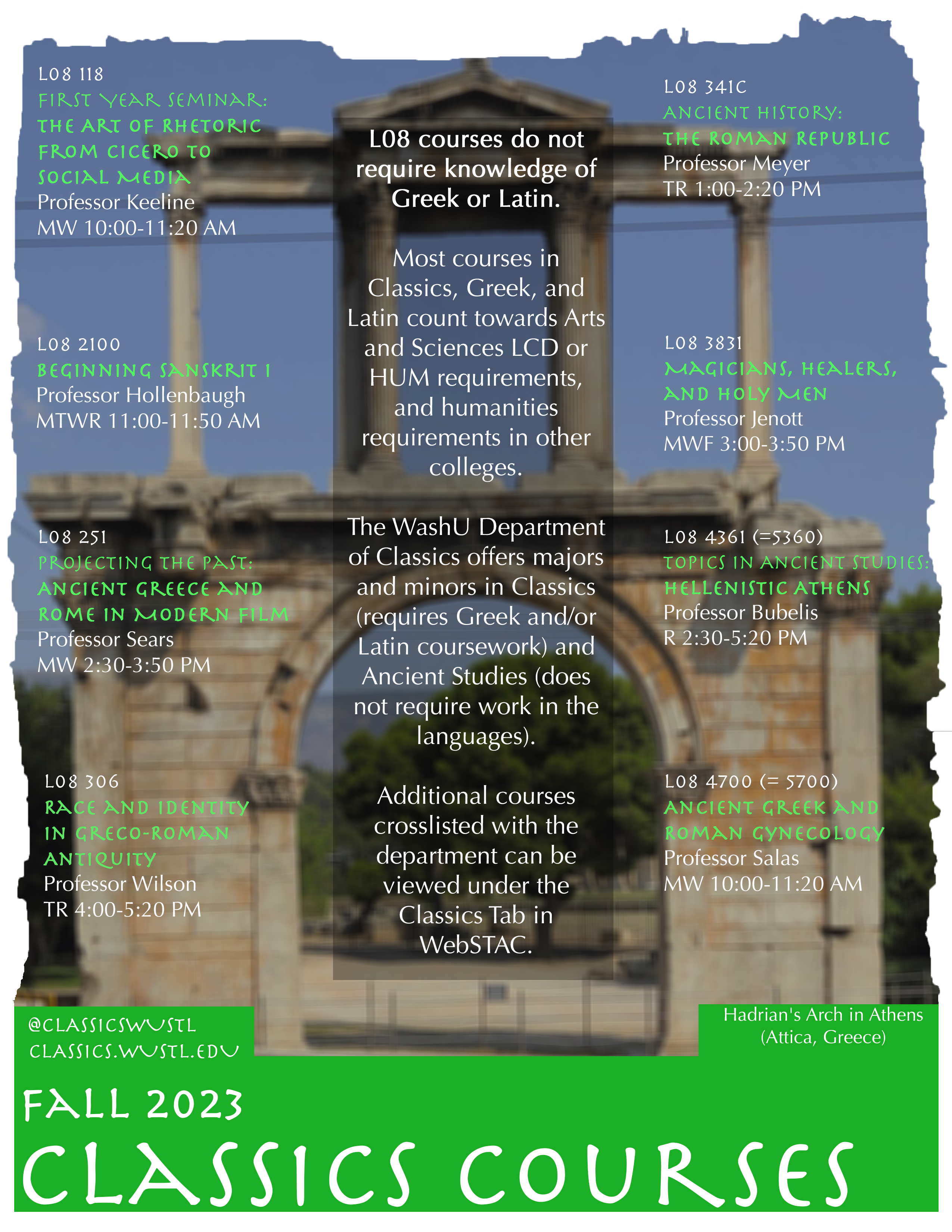
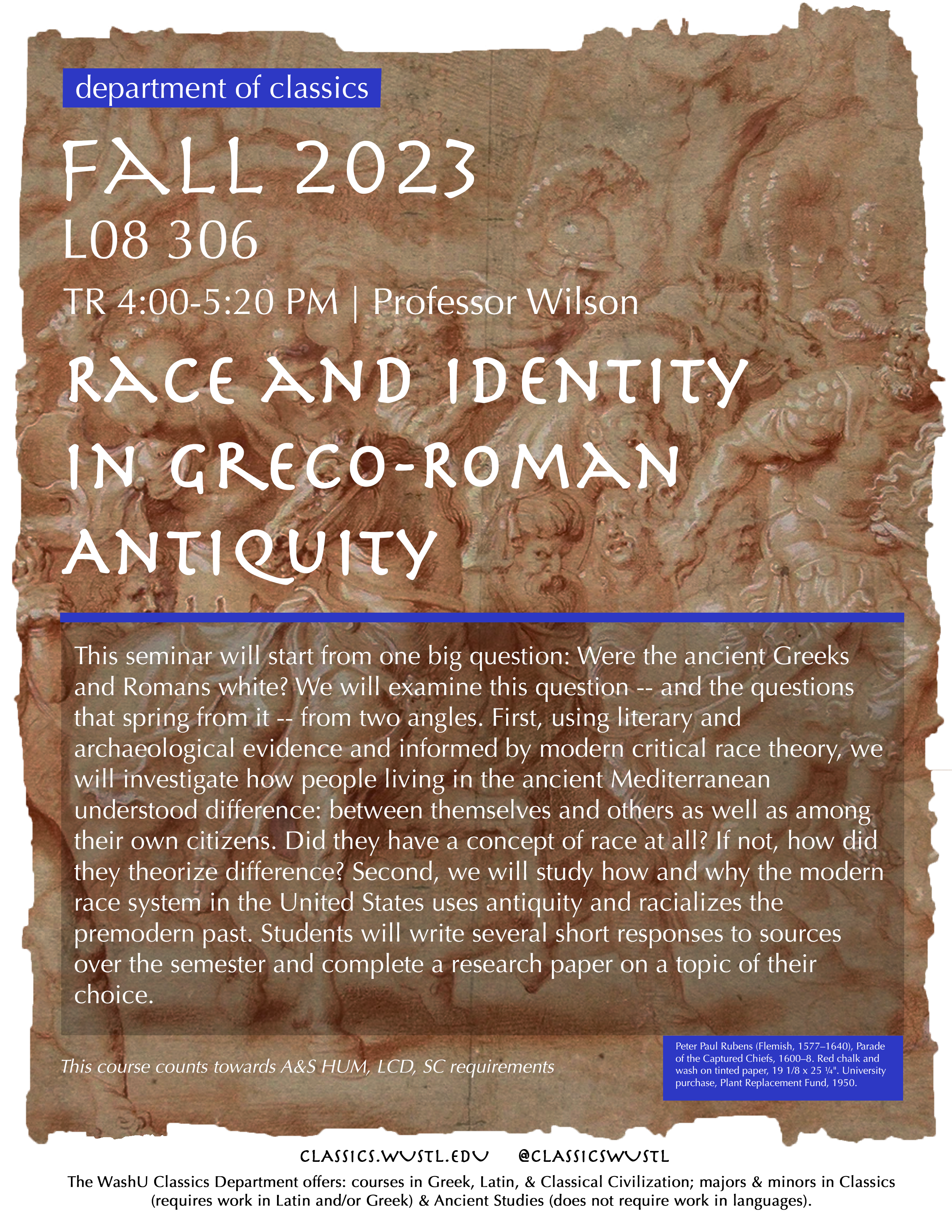
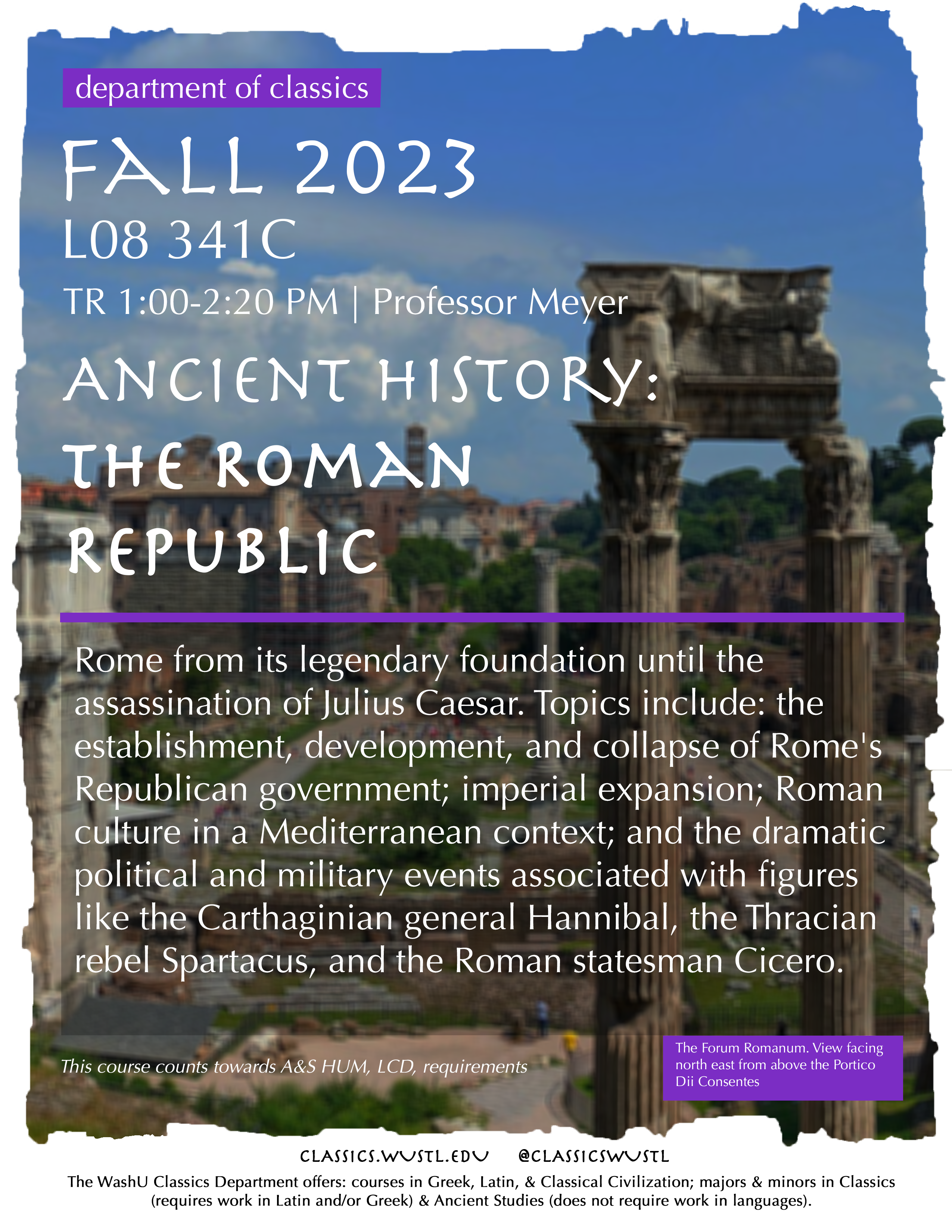
Classics 341C - Ancient History: The Roman Republic
Classics 342C - Ancient History: The Roman Empire
Classics 345C - Greek History: Archaic and Classical
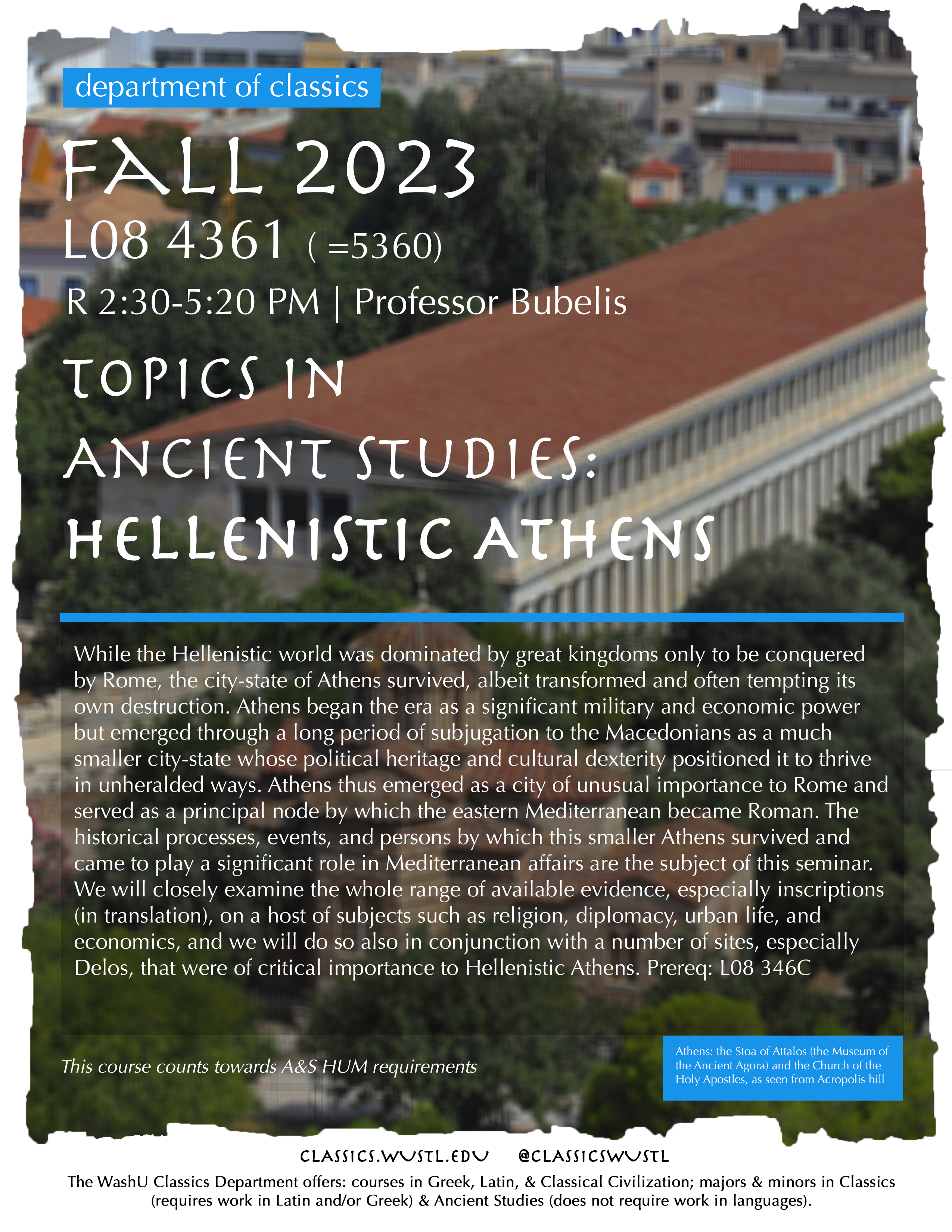
Classics 346C - Greek History: The Age of Alexander

Elective Courses: Three other courses in the culture of Greece and Rome, the selection to be mutually agreeable to the Department advisor and to the student. No more than two courses may be at the 200 level. Classics 225D may not be counted.